While Shepherds Watch Their Flocks By Night: Family Holidays on the Farm
Whilst Shepherd’s Watch their flocks by night, you could be staying just a few yards away in a delightful self catering property by the same name!
Shepherd’s Watch is a delightful single storey barn, beautifully converted into a lovely self-catering property. Sleeping up to six, it is ideal for families with children, who will love the farm setting and the animals, whether they visit in the depths of winter or high summer.
In autumn calves are born and go out into the fields just before Christmas. Lambs are born from early January through to the the end of February and guests are more than welcome to watch the lambing and see the lambs as they take their first wobbly steps. Hens (of various exotic breeds) and guinea fowl roam the grounds. Swallows nest in the stables and the barns. There are kingfishers on the moat, hares in the fields and a pair of barn owls living in the woods beside the paddock. There is large walled garden behind the farmhouse which all ages are welcome to enjoy, with swing, swing boat and trampoline and a summer house.
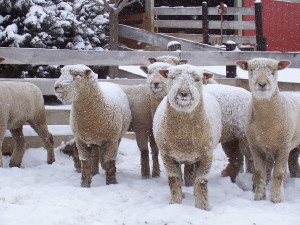
What makes this experience all the more wonderful is the fact that Shepherd’s Watch owners keep rare breeds, so you will have the chance to see sheep few others can see.
Southdown is the name of this small English sheep. There were over 110,000 Southdowns in Sussex in the 12th century and their wool was well known for its superb quality, as was their meat. In 1780, John Ellman realized the potential of these lovely sheep and set out to standardize the breed. Suited to a lowland setting, Southdowns were soon bred by farmers in Cambridge and Suffolk as well as the Sussex Downs.
In California and New Zealand Southdowns are often left to graze in the vineyards, eating the weeds, but too short to reach the grapes on the vines. In Sussex their popularity was largely down to the fact that they helped to maintain the fertility of the soil, the large flocks grazing the open downs by day and going down to the lower arable land at dusk for folding.
The breed remained popular until the onset of the First World War, when shepherds and farm workers went off to war. By 1922, the 359 pedigree flocks had shrunk to 245. From then until 1939, the registered Southdown flocks numbered around 200.
In the Second World War sheep farming declined further and the Southdown eventually became a Rare Breed. Today they are a rare site but one you can enjoy when you visit Shepherd’s Watch, Elmham.
Book a holiday to Suffolk at Shepherds Watch today!
Related Articles
Birdwatching - 10 Species To Get You Started
With its wide variety of habitats - encompassing woodland, heathland, reedbed, saltmar...
Down on the Farm - Family Outing to the Suffolk Punch Trust
Over the last few years we have been crabbing, boating, built sandcastles and visited...
BBC Springwatch Comes to Suffolk
BBC Springwatch is coming to Suffolk this spring and will be broadcasting from the
While Shepherds Watch Their Flocks By Night: Family Holidays on the Farm
Whilst Shepherd’s Watch their flocks by night, you could be staying just a few yard...
Fishing on the Suffolk Coast
Between Pakefield and Orford Ness, fishing enthusiasts will find the deepest stretc...
Farmyard Holidays for Families
There's nothing more memorable for children than being able to meet and inte...
Suffolk Wildlife Trust Reserves: North Suffolk
Nature enthusiasts listen in! Here's our guide to just a handful of the many Suffolk Wildl...